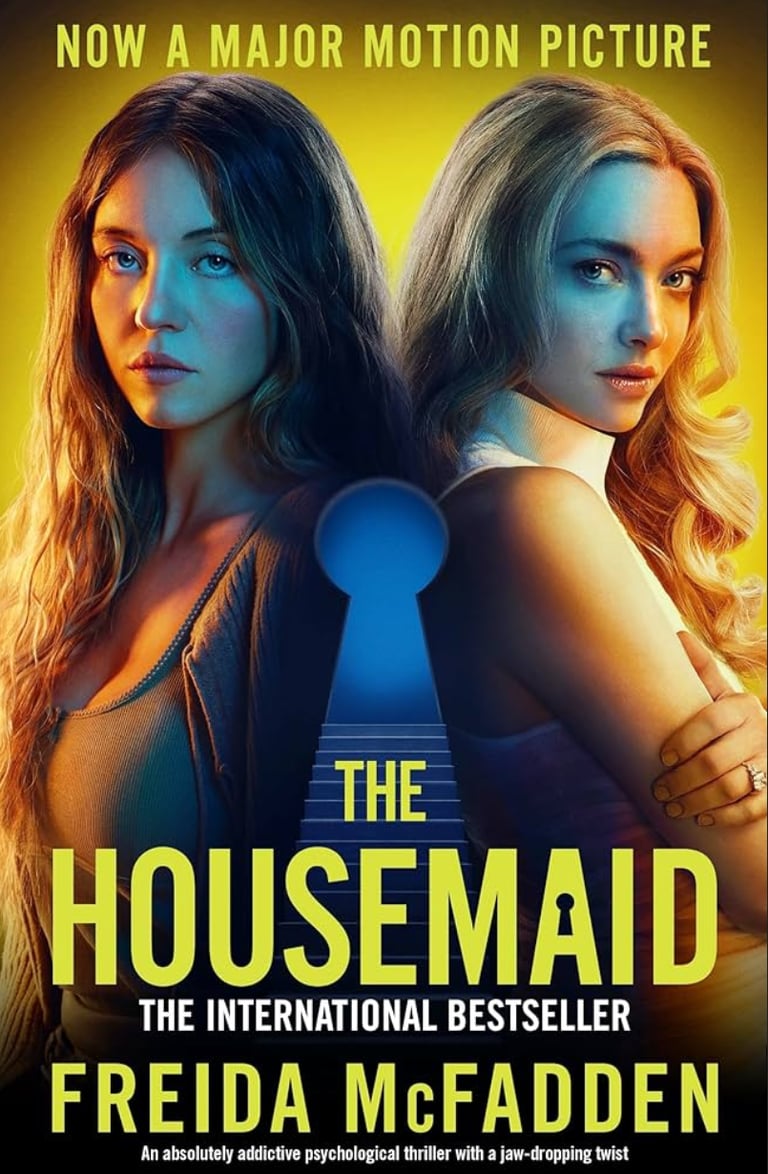
Upstairs, downstairs, and dangerously unstable: a clear-eyed review of "The Housemaid"
Beneath the popcorn thrills, this is a morality play about class, control, and the stories people tell to survive. Verdict: Read if you want a one-sitting rollercoaster; skip if contrivances and neat reversals annoy you.
BOOKS
1/16/20265 min read
The Big Idea
A young woman with a messy past takes a live-in maid job with a wealthy family. The rules look simple; the reality isn’t. The book’s blunt question: who really holds power inside a house, the one with keys, the one with money, or the one who understands what’s going on? It doesn’t try to map society; it maps a pressure cooker: closed space, unequal leverage, accelerated mistrust.
What’s New Here (and Why It Matters)
Domestic thrillers are crowded. This one distinguishes itself by making labor the engine of suspense. Chore lists, schedules, nondisclosure terms, and “just helping out” become narrative levers. Rather than relying only on affair-and-secret beats, the novel mines the banality of paid care work—the invisible tasks that keep rich households running and shows how quickly “help” becomes control. If your comparators are Behind Closed Doors (B.A. Paris) or The Wife Between Us (Hendricks/Pekkanen), this skews closer to Paris: brisk, claustrophobic, designed for gasp factor.
Core Arguments / Plot Architecture (spoiler-safe)
Structure: A propulsive first half from the maid’s point of view; a pivot that reframes prior scenes; a final act that resolves the house-as-maze premise.
Stakes: Livelihood, freedom, and credibility. The protagonist can’t afford to be believed too late.
Evidence style: Anecdotal and atmospheric—odd rules, emotional whiplash, and objects that don’t fit their setting. No heavy data; the book runs on reveals and reversals.
Thematic spine: Class masquerade, unreliable narratives, and the ethics of revenge.
Deep Dive (Fiction)
Craft & Technique
Narrative voice: First-person, immediate, deliberately naive at times. Short chapters keep you sprinting; interiority is functional rather than lyrical.
Pacing: Chapter-end hooks are the fuel. It’s engineered for “one more chapter” until you realize you’ve read 150 pages.
Character work: The wealthy couple reads as archetype at first—charismatic charm vs. brittle volatility—but the point is misdirection. The maid’s backstory is drip-fed to toggle sympathy and suspicion.
Setting as device: The house is a character. Rooms double as boundaries; the attic/basement vibe amplifies secrecy. Locks, cameras, and “off-limit” zones push the plot without needing exotic set-pieces.
Style: Clean, utilitarian prose. Think airplane-read clarity, not stylistic flourish.
Theme × Form
The closed setting mirrors the closed options available to someone with few resources. The short-chapter structure imitates hypervigilance: you’re always scanning the next beat for threat. The genre’s core promise—you’re not seeing what you think you’re seeing—is served by a mid-book perspective shift that reassigns guilt and agency.
Memorable Moments (no spoilers)
A mundane household task that becomes a test of obedience.
A rule broken in a small way that detonates in a big way.
A final confrontation where the house’s architecture decides the winner.
Evidence Check
Strong: Momentum; scene economy; the mechanics of coercion via “kindness.”
Weak: Realism. Some reversals require characters to be conveniently oblivious or conveniently brilliant. Accept the ride, or get off early.
Assumptions Under the Hood
People with money can buy discretion—and trapdoors in contracts.
Shame and a criminal record are levers stronger than locks.
In zero-sum homes, survival beats ethics (until the endgame).
Practical Takeaways
Five reflection prompts to deepen the read (and your risk radar):
Rule clarity: Where do you work or live under unwritten rules? Write them down; ambiguity is a control tactic.
Leverage inventory: If someone revoked a single permission (housing, reference, paycheck), how exposed would you be? Build a backup.
Boundary rehearsal: Practice “No, that’s outside my role,” out loud. Scripts beat panic.
Pattern spotting: When affection and punishment alternate quickly, ask what the alternation buys the other person.
Exit plan: Create a simple two-call plan for emergencies (who, when, what). Thrillers exaggerate stakes, but preparedness isn’t fiction.
Contrarian Note
The novel flirts with the idea that cleverness justifies everything—that the smartest manipulator deserves the last word. That’s satisfying on the page, but in real life it normalizes escalation instead of accountability. If you read thrillers to practice moral muscles, this one might over-reward cunning.
Blind Spots & Risks
Mental health tropes: Volatility and “unhinged” behavior risk flattening complex psychology into a plot device.
Class caricature: Wealthy characters are framed broadly; the book aims for pace, not socioeconomic nuance.
System invisibility: Legal and labor systems appear mainly as threats or loopholes, not as realistic constraints; this trims realism for speed.
Violence elasticity: Consequences scale up fast and resolve even faster; some readers will call foul.
Who Should Read This (and Who Shouldn’t)
Read if:
You want a sprinting, twist-forward domestic thriller.
You enjoy unreliable narrators and perspective flips.
You’re fine with plausibility bent in service of tension.
Skip if:
You need layered prose or deep character psychology.
You dislike manipulation-as-heroism revenge arcs.
You prefer mysteries where clues, not reversals, drive the payoff.
How to Read It
Pacing: Two sittings max; the structure rewards immersion.
Skim vs. slow down: Skim repetitive chore descriptions; linger on contract clauses, “house rules,” and throwaway comments—those are the fuse wires.
Format: Print or ebook beats audio; the cliffhanger chaptering is easier to control with pages.
Companion reads: Pair with a slower, more realistic domestic novel afterward if you want to decompress and recalibrate plausibility.
Scorecard (1-10)
Originality — 6/10: Familiar setup, smart use of labor dynamics.
Rigor / Craft — 7/10: Tight pacing; reversals land even when improbable.
Clarity — 9/10: Crisp scenes, clean motivations (once revealed).
Emotional Impact — 7/10: Anxiety and catharsis delivered on schedule.
Re-read Value — 5/10: Once the mechanism is known, the thrill fades; some fun in reverse-engineering clues.
If You Liked This, Try…
B.A. Paris, Behind Closed Doors — Domestic control rendered as rulebook; relentless tension.
Liv Constantine, The Last Mrs. Parrish — Class envy weaponized; cat-and-mouse mind games.
Ruth Ware, The Turn of the Key — Governess job, smart-home menace, and secrets stacked in walls.
Shari Lapena, The Couple Next Door — Suburban respectability cracking under pressure; brisk, twisty.
FAQs
Is it very graphic?
Violence is present but more implied than detailed. Psychological menace does the heavy lifting.
Is this literary or strictly commercial?
Commercial. The prose serves pacing, not poetry.
How unreliable is the narrator?
Enough to keep you second-guessing without pure hallucination territory. The book plays fair-ish with planted details.
Any sensitive themes to flag?
Coercive control, gaslighting, class exploitation, and references to a troubled past.
Does it stand alone?
Yes as a reading experience. If you’re collecting related titles, check publication order separately.
Final Verdict
The Housemaid is engineered entertainment: quick chapters, sharp hooks, satisfying pivots. It won’t pass a realism audit, and it leans on broad strokes for wealth and mental health. But if you’re in the market for a tightly wound domestic trap with a clever release valve, buy or borrow with confidence. If you want nuance over nerve, choose a slower, more layered novel and leave this for your next flight.