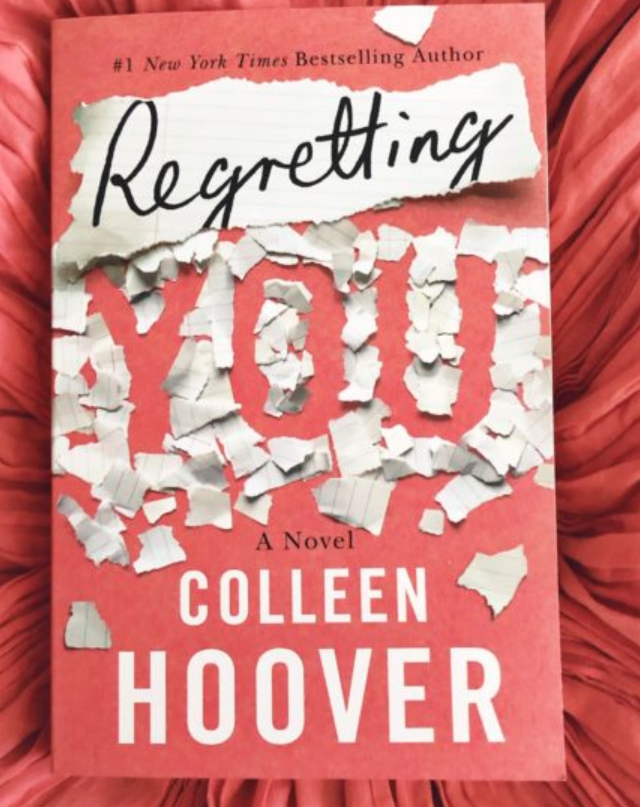
Mothers, Daughters, and the Cost of Secrets: A Look at "Regretting You"
Real argument: Grief doesn’t erase old resentments; it magnifies them. When trust breaks in a family, love alone won’t fix it—clear boundaries and honest conversation will. Verdict: Read for cathartic mother–daughter conflict and accessible prose; skip if you want subtlety over storm.
BOOKS
1/7/20265 min read
The Big Idea
Regretting You asks a blunt question: when tragedy hits and old secrets surface, can a parent and teen daughter rebuild trust without burning down the past? The book says yes—but only after both sides confront the selfish logic of “I lied to protect you.” It’s less a romance than a family audit. The problem it tackles isn’t grief itself; it’s how families weaponize silence, and how silence turns everyday missteps into generational rifts.
What’s New Here (and Why It Matters)
Within contemporary commercial fiction, mother–daughter dramas often make the parent a villain or the teen a caricature. Hoover avoids both. She gives each narrator a coherent rationale and lets their worst moments play out without moralizing. The alternating perspectives do real work: we see how identical events generate opposite stories depending on age, context, and access to facts. Compared to domestic dramas that hinge on a single third-act reveal, this novel emphasizes incremental disclosures and their daily fallout. Readers learn how “protective omission” multiplies: one lie demands another, and soon the family is living in a parallel story.
Core Arguments / Plot Architecture (spoiler-safe)
Structure: Dual first-person narration (mother and daughter) in short, punchy chapters. Early tragedy triggers the plot; subsequent chapters revolve around secrets, romantic tension, and the slow negotiation of boundaries.
Stakes: Trust, independence, and the right to one’s own narrative. No police procedural here—the conflict is emotional jurisdiction: Who gets to decide what truth is “age-appropriate”?
Evidence style: Character memory, text messages, and confrontations. Minimal subplots outside the central household and the daughter’s school/social world.
Thematic spine: Love vs. control; grief vs. guilt; privacy vs. secrecy.
Deep Dive
Craft & Technique
Narrative voice: Plainspoken, contemporary, and intentionally spare. The mother’s chapters carry restrained adult logic; the daughter’s have more heat and immediacy. The distinction holds, even when their positions switch.
Pacing: Fast. Chapters function like scenes in a streaming drama—frequent beats, emotional cliffhangers, quick reversals.
Character arcs: Both narrators move from righteous certainty to flawed empathy. Side characters—friends, romantic interests—are sketched enough to drive decisions but seldom steal the stage.
World-building: Suburban Texas mood without heavy regionalism. Settings (home, school, hospital, coffee shop) act as emotional containers rather than fully realized places.
Theme × Form
Alternating POV spotlights how incomplete information creates villains out of loved ones.
Texting and notes mirror how modern families communicate around, not through, conflict.
Scene economy (few locations, many conversations) keeps focus on choices over circumstances.
Memorable Moments (no spoilers)
A small, ordinary object that rewires the daughter’s understanding of an entire relationship.
A kitchen confrontation where both sides are right—and both do damage.
A quiet car ride that finally breaks the stalemate more than any shouting match.
Practical Takeaways
Audit your “protective lies.” Write two lists: harms of telling the truth vs. harms of secrecy. Circle the harms already happening.
Boundary script. Draft a one-sentence boundary for a recurring conflict (“I won’t discuss X by text”). Use it verbatim for one week.
Repair ritual. Choose a low-stakes, recurring activity (weekly coffee, walk) where no problem-solving is allowed—only catching up.
Anger vs. information. Before confronting someone, note the fact you want, the feeling you have, and the action you’ll take regardless of the answer.
Grief bandwidth. Identify one responsibility you can drop for 30 days without long-term harm. Do it.
Narrative swap. Write the other person’s version of the last fight in 5 sentences. Read it aloud to yourself.
Texting truce. Move any heated exchange to a scheduled, in-person conversation; send only logistics by phone.
Contrarian Note
The plot leans on tidy intersections—discoveries that arrive at just the right moment, people entering rooms at just the wrong time. That keeps pages turning, but it also smooths the messiness that real grief imposes. Why it matters: if you’re reading for emotional realism, those coincidences can feel like authorial steering, not human chaos. The emotional beats still land, but the scaffolding shows.
Blind Spots & Risks
Class and safety nets: The book largely sidesteps structural pressures (healthcare costs, job precarity) that amplify grief in many households.
Teen voice calibration: Some teen reactions read slightly older when the plot needs maturity, younger when it needs volatility.
Male perspectives: Secondary and functional. That choice clarifies the mother–daughter line but flattens certain relational stakes.
Therapeutic depth: Processing happens mostly through family dialogue; readers seeking robust portrayal of counseling or group support won’t find it.
Who Should Read This (and Who Shouldn’t)
Read if you’re:
A fan of contemporary domestic fiction with high emotional stakes.
In a book club—there’s plenty to debate without spoiling.
Interested in mother–daughter dynamics that don’t settle for tidy apologies.
Maybe skip if you’re:
Looking for formal experimentation or literary style over momentum.
Sensitive to melodrama or last-minute revelations.
Hoping for a strong external plot (mystery, legal, or medical procedural).
How to Read It
Pacing: Two or three sittings works best to maintain emotional continuity.
Skim/slow guidance: Skim repeated internal ruminations after a revelation; slow down on scenes where characters negotiate rules or rewrite a memory.
Format: Audio is effective—the dual narrators help—but print makes it easier to track shifts and re-read key evidence.
Book-club tip: Agree on a spoiler boundary before meeting; the book’s impact rests on what is revealed when.
Scorecard (1–10)
Originality: 6 — Familiar setup, stronger execution than premise.
Rigor / Craft: 7 — Tight structure; some convenient plotting.
Clarity: 9 — Clean prose, clear stakes, accessible emotions.
Emotional Impact: 8 — Earned catharsis, even when mechanics show.
Re-read Value: 5 — Character beats resonate, but surprises fade on return.
If You Liked This, Try…
Celeste Ng, Little Fires Everywhere — Mother–daughter conflict with class and suburbia in play.
Brit Bennett, The Mothers — Secrets, grief, and how communities amplify or contain them.
Taylor Jenkins Reid, Maybe in Another Life — Consequences of small choices filtered through romance.
Jodi Picoult, My Sister’s Keeper — Family loyalty versus honesty under medical and moral strain.
Ann Napolitano, Dear Edward — Grief, resilience, and chosen family after catastrophe.
FAQs
Q:Is this more romance or family drama?
A:Family drama first. Romance subplots matter, but the spine is mother–daughter repair.
Q:How heavy is it?
A:Emotionally heavy but readable. The language is simple; the topics—grief, betrayal—are not.
Q:Any content warnings?
A:Grief from sudden loss, betrayal, and emotionally charged conflict. No graphic violence.
Q:Is it suitable for teens?
A:Older teens, yes—especially if read alongside a parent. The dual POV can spark useful conversations.
Q:Standalone or series?
A:Standalone.
Final Verdict
A fast, emotionally direct family drama that earns its big feelings even when the plot machinery creaks. Read it if you want a cathartic look at how love and control collide—and how repair actually happens. Borrow if you’re indifferent to domestic fiction. Buy if you’re a book-club organizer or you live inside complicated mother–daughter dynamics.