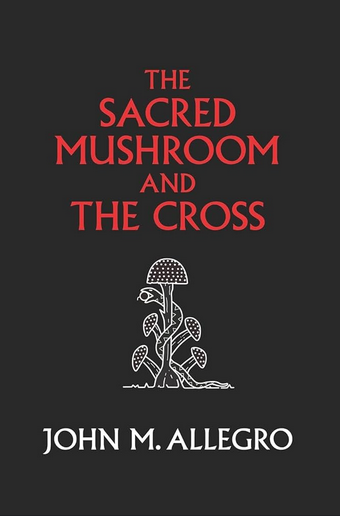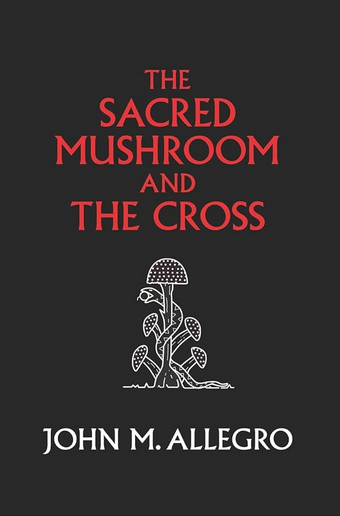
Psychedelics, Scripture, and Speculation: A Clear-Eyed Review of "Sacred Mushroom and the Cross"
Real argument: Early Christianity borrowed heavily from ancient fertility cults that used psychoactive mushrooms; biblical language allegedly encodes those rites. Verdict: Borrow for curiosity, not canon. Engaging provocation; evidentially thin.
BOOKS
11/22/20255 min read


The Big Idea
The book proposes that the roots of Christianity lie in pre-Christian fertility religions where psychoactive mushrooms—typically Amanita muscaria—played a sacramental role. According to the author, names, parables, and symbols in scripture are not straightforward theology but esoteric code pointing to mushroom rites. The problem it tries to solve: Why do so many myths and ritual motifs recur across cultures? The solution offered: a unifying entheogenic key. The problem it fails to solve: demonstrating that this key actually unlocks the historical, textual, and archaeological record.
What’s New Here (and Why It Matters)
Books on religion’s origins often argue for moral systems, political control, or shared mythic structures. This one wagers on a biochemical driver: psychedelics. Its novelty is linguistic—heavy reliance on etymology and cross-language puns—to claim the mushroom sits in plain sight, hidden by translators and institutional power. Whether you accept it or not, the book forces a more disciplined question: what counts as evidence for ritual use (texts, residues, iconography, comparative anthropology), and how do we weigh it?
Core Arguments / Plot Architecture (spoiler-safe)
Setup: A tour of Near Eastern myths and fertility cults; the mushroom as sacred mediator.
Method: Comparative linguistics—linking names and phrases across Sumerian, Hebrew, Greek, and related languages; symbolic readings of biblical imagery.
Claims:
Key scriptural terms allegedly encode fungi and intoxication.
Early Christian sacraments descend from entheogenic rites, later sanitized by orthodoxy.
Church authority obscured these origins through translation and doctrinal consolidation.
Evidence style: Etymological chains, speculative iconography, and comparative myth. Minimal hard archaeology.
Deep Dive
Frameworks & Models (and how to use them)
Entheogenic Origins Hypothesis
Claim: Psychedelics catalyzed religious experience and ritual.
Use in real life: When you encounter a sweeping religious origin claim, map it to four bins: Textual (what do primary sources say), Material (artifacts/residues), Iconographic (imagery), Ethnographic (modern analogues). Don’t let one bin substitute for the others.
Ciphered Scripture Model
Claim: Scripture encodes practices via code words/wordplay.
Use: Ask three questions: (a) Are the proposed puns linguistically valid in the original language? (b) Are there contemporaneous readers who interpreted it that way? (c) Is there independent corroboration (ritual manuals, legal edicts, polemics)?
Syncretic Funnel
Claim: Diverse cults funnel into emergent religions; motifs persist.
Use: Distinguish motif similarity from historical dependence. Similar images (trees, cups, serpents) do not imply identical rites without a transmission path.
Evidence Check
Strong(ish): The general idea that altered states can produce intense religious experiences is plausible and supported by anthropology in other contexts. Motif overlap across ancient Near Eastern myths is real.
Weak: The linguistic scaffolding is brittle, long chains of etymologies and cross-language echoes without discipline in historical linguistics. The argument often treats coincidence and metaphor as confirmation. Little to no primary-source testimony from early Christians explicitly describing mushroom sacraments. Minimal archaeological residues tied to Christian contexts.
Bias risks: Confirmation bias (finding mushrooms everywhere once you look), survivorship bias (selecting accommodating texts/images), and apophenia (pattern-spotting without controls).
Assumptions Under the Hood
That ancient authors intended multi-layered ciphers rather than metaphors or genre conventions.
That cross-linguistic sound resemblances imply semantic continuity.
That absence of explicit evidence is due to suppression, not non-existence.
These assumptions are sizable. They might be true in isolated cases; as global explanations, they’re overextended.
Practical Takeaways
Create an evidence ledger: For any grand theory, split claims into textual, material, iconographic, ethnographic. Score each 0–2. If your ledger leans on one column, proceed with caution.
Apply linguistic hygiene: Demand attested usage in the same period and language before accepting puns/ciphers.
Beware motif traps: Shared symbols aren’t smoking guns; seek documented transmission routes.
Run the “control test”: Could you generate the same reading without mushrooms? If yes, your theory is too elastic.
Read two levels: Enjoy the comparative-myth tour; resist the historical leap unless corroborated.
Use for creativity, not catechism: The entheogen lens can enliven readings and research questions; don’t confuse prompts with proof.
Contrarian Note
The scholarly mainstream can be allergic to fringe hypotheses, sometimes for good reason, sometimes out of disciplinary inertia. Dismissing entheogens categorically would be a mistake. Psychedelic sacraments are well-documented in other cultures, and pockets of ancient Mediterranean religion likely used intoxicants. The contrarian position here: a targeted entheogen hypothesis for particular cults or rites could be right—even if this book’s universalizing version is not.
Blind Spots & Risks
Philological overreach: Linguistics without strict historical method is quicksand.
Lack of falsifiability: If every symbol can be read as a mushroom, the theory can’t be wrong. That’s a red flag.
Institutional villainy default: Censorship is a convenient explanation for missing data; it demands evidence too.
Cultural flattening: Conflating Near Eastern, Greco-Roman, and early Christian practices into one continuous sacrament underestimates diversity in ritual life.
Who Should Read This (and Who Shouldn’t)
Read if you are:
Curious about entheogens and comparative religion.
Comfortable weighing bold claims against thin evidence.
A writer or creator hunting for provocative lenses.
Skip if you want:
Peer-reviewed consensus on Christian origins.
A methodological primer in historical linguistics.
Clear primary-source anchors and material culture.
How to Read It
Pacing: One or two chapters at a time; keep a parallel note file with separate sections for claims and supporting evidence.
Skim vs. slow down: Skim repeated etymology chains; slow down on passages that cite specific artifacts or contemporaneous texts.
Format: Print with a pencil; you’ll want to margin-flag every leap.
Pairings: Read alongside critical scholarship on early Christianity and ritual practice to calibrate standards of proof.
Scorecard (1-10)
Originality: 9 - A bold, memorable thesis.
Rigor / Craft: 3 - Ambitious but methodologically loose.
Clarity: 6 - Generally readable; density spikes in etymology sections.
Usefulness: 5 - Good as a lens for questions, not as answers.
Re-read Value: 5 - Worth revisiting for curiosity, not for authority.
If You Liked This, Try…
The Road to Eleusis (Wasson/Hofmann/Ruck): A tighter entheogen case for Greek mystery rites.
The Immortality Key (Brian C. Muraresku): Modern attempt to connect psychedelics and early Christianity—controversial, but method-aware.
Food of the Gods (Terence McKenna): Big-picture speculation on psychoactives and culture; imaginative, not cautious.
Did Jesus Exist? (Bart D. Ehrman): A mainstream corrective on method and sources in early Christian studies.
FAQs
Q:Is this thesis accepted by scholars?
A:No. It’s widely viewed as speculative; specific claims lack robust textual and archaeological backing.
Q:Are there ancient precedents for psychedelic sacraments?
A:Yes, in some traditions (e.g., mystery religions). That doesn’t automatically extend to early Christianity.
Q:What evidence would change minds?
A:Contemporaneous Christian texts describing entheogenic sacraments, residue analysis tied to Christian sites, or hostile critiques by early church opponents explicitly naming such practices.
Q:Is the linguistic method sound?
A:Often not. Cross-language puns without historical links are weak evidence.
Q:How should a non-specialist approach it?
A:As provocative comparative myth, not settled history. Keep an evidence ledger.
Final Verdict
Take this as a daring hypothesis, not a history. It’s valuable as a thought experiment that sharpens your standards of evidence and reminds you how easily humans see patterns. But the case leans hard on speculative linguistics and selective readings. Borrow, don’t buy- unless you collect controversial religion titles.