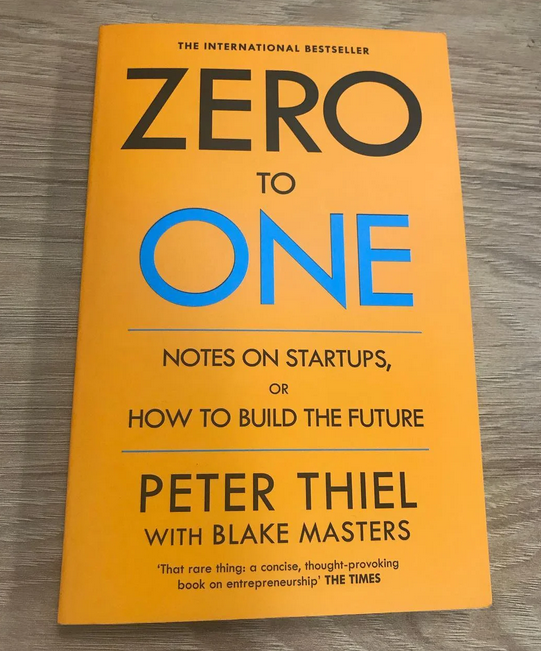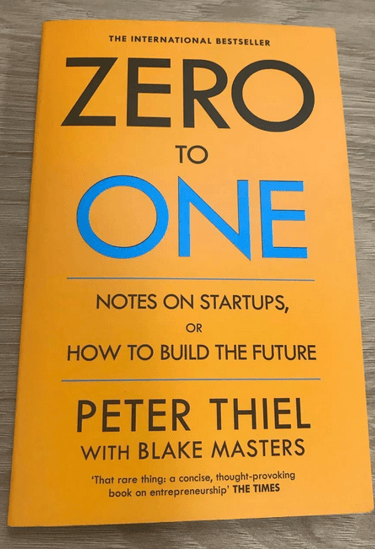
Monopoly, Power Laws, and Hype: A No-BS Review of "Zero to One"
Real argument: The only startups that matter go from zero to one, they build something uniquely valuable, capture monopoly-style power, and ride power-law returns. Competing in crowded markets is for suckers. Verdict: Read-but read critically. Great lens, dangerous if swallowed whole.
BOOKS
11/19/20255 min read


The Big Idea
Thiel’s core claim: real progress is vertical, not horizontal. Copycats take the world from “1 to n”; true innovators go from “0 to 1” by creating something singular. The only defensible outcome is a de facto monopoly built on proprietary advantage-technology, network effects, brand, distribution—rather than polite competition. The book promises an operating philosophy for founders who want to build such companies. It partly delivers.
What’s New Here (and Why It Matters)
At the time, much startup advice obsessed over lean testing, fast iteration, and “move fast in any vaguely hot market.” Thiel cuts across that:
Argues that competition erodes profits; monopoly is the rational endgame.
Pushes “secret” thinking: great companies exploit truths others haven’t noticed or acted on.
Emphasizes power-law reality: a few companies drive most returns, so aim to be one-don’t optimize for mediocrity.
None of this is mathematically shocking, but he states it with unusual clarity and ideological bite. For founders drowning in generic hustle porn, this framework is a useful slap.
Core Arguments / Plot Architecture (spoiler-safe)
The book (built from his Stanford CS183 startup class) moves through short, thematic chapters:
Zero vs One: Horizontal (globalization, copying) vs vertical (technology, real innovation).
Monopoly vs Competition: Competitive markets kill margins; aim for dominance in a narrow niche, then expand.
Secrets: Big companies come from believing and acting on non-obvious truths.
Founder & Team Dynamics: Strong cultures, aligned equity, clear roles, tight early teams.
Power Laws: In venture and outcomes, a few bets matter; act accordingly.
Distribution & Durability: Sales, not just product; defensibility over decades.
Evidence: anecdotes (PayPal, Facebook), pattern-matching from Thiel’s investing, and thought experiments. Limited systematic data, heavy persuasive framing.
Deep Dive
Frameworks & Models
0 → 1 vs 1 → n
Ask: Are you creating something fundamentally new or just slicing an existing market thinner?
Use: If you’re clearly 1 → n, be honest. Either find a sharper wedge (niche + unfair edge) or stop pretending you’re building a unicorn.
Monopoly First
Start with a small, winnable market and dominate it.
Concretely: Define your “earned monopoly” on:
Specific user,
Specific problem,
Specific geography/vertical.
If 5 other YC/SaaS clones can claim the same thing, you don’t have it.
Secrets
Operationalize as:
What do we believe about this market that smart people think is wrong or irrelevant?
How do we cash that belief out in product, pricing, or distribution?
If your “secret” is obvious (e.g., “customers like good UX”), you don’t have one.
Power Law Thinking
Focus: A few features, hires, customers, or bets will drive outsized impact.
Use: Ruthless prioritization; don’t “diversify” yourself into mediocrity.
The 7 Questions (Strategy Checklist)
Thiel outlines questions on technology, timing, monopoly, people, distribution, durability, and secret.
Treat them as a go/no-go filter, not fortune cookies.
Evidence Check
Strengths:
Internally coherent philosophy; aligned with how venture outcomes actually concentrate. Scribd
Grounded in first-hand experience with PayPal, Palantir, and early-stage investing.
Cuts through “build something cool and figure it out later” fluff.
Weaknesses:
Survivorship bias: Lessons extracted from a thin slice of extreme winners.
Selective examples: Counter-cases and messy grinds are underplayed.
Abstraction: Some advice (“have proprietary tech,” “be a monopoly”) is directionally right but execution-light.
Treat it as a sharp lens, not as physics.
Assumptions Under the Hood
For his worldview to hold, several assumptions ride:
Tech markets are winner-take-most; pursuing monopoly is both rational and socially beneficial through innovation.
Contrarian, concentrated bets generally outperform diversification.
Regulatory and social pushback against monopolies won’t structurally cap your upside (optimistic).
These assumptions are contestable and matter if you’re not a Valley VC living inside that power structure.
Practical Takeaways
Brutally narrow your market.
Redefine your “beachhead” until you can plausibly own 70%+ of it in 3–5 years.Write down your secret.
One paragraph: what you know or believe (with reasons) that the market undervalues. If you can’t, that’s the work.Run the 7-question filter.
Tech, timing, monopoly, people, distribution, durability, secret. Fail loudly; fix or pivot instead of hand-waving.Design for moats, not features.
Ask of every roadmap item: does this deepen our moat (data, network, brand, infra), or is it cosmetic?Hire for mission-fit, not generic talent.
Early team = people who are all-in on this problem, not resume tourists.Avoid “pretty competition.”
If a space is crowded with well-funded lookalikes, assume returns are gone unless your edge is violent.Think in power laws.
For your time, your product, your portfolio: double down on what's working; kill the rest faster.
Contrarian Note
The most dubious move: treating monopoly as inherently virtuous because (his argument) great monopolies innovate and offer value. That’s tidy theory, sloppy reality. Modern platform behavior shows how quickly “innovative monopoly” tilts into predatory. Why it matters: if founders absorb “monopoly = good” without ethical and regulatory nuance, they optimize for extraction, not progress.
Blind Spots & Risks
Ethics & power: Almost no serious engagement with labor, privacy, or democratic impact of concentrated power.
Non-software realities: Many great businesses are “1 → n” or operate in constrained/reg’d markets; they’re treated as second-class.
Accessibility: Tailored to a specific archetype: hyper-ambitious, well-networked, often already privileged.
Mythologizing contrarianism: Encourages posture (“everyone disagrees with me, so I’m a genius”) instead of disciplined dissent.
Who Should Read This (and Who Shouldn’t)
Read if:
You’re a founder or operator aiming for category-defining scale.
You’re an investor or exec who needs to internalize power-law thinking.
You’re willing to argue with the book, not worship it.
Skip if:
You run a small, steady, non-tech or services business and don’t need monopoly ideology.
You want tactical playbooks: sales scripts, funnels, OKRs-not here.
You can’t filter out the author’s politics or rhetoric from the core ideas.
How to Read It
Pacing: One or two chapters per sitting, max. Pause to test each idea against your company.
Skim vs. slow down: Skim the anecdotes you’ve heard; slow down on monopoly, secrets, power laws, and the 7 questions.
Format: Print/ebook; you’ll want to annotate and argue in the margins.
Pairing: Read with opposing views on competition, antitrust, and sustainable businesses for balance.
Scorecard (1-10)
Originality: 8 - Monopoly + secrets + power-law lens is crisp and distinctive.
Rigor / Craft: 6 - Coherent and sharp, but heavy on anecdotes and ideology.
Clarity: 9 - Clean structure, punchy language, easy to internalize.
Usefulness: 8 - High for ambitious founders who apply it critically.
Re-read Value: 7 - Worth revisiting at different company stages—with more skepticism each time.
If You Liked This, Try…
The Hard Thing About Hard Things (Ben Horowitz): The messy operator’s counterweight to Thiel’s clean theory.
Play Bigger (Al Ramadan et al.): Category design as a structured way to aim for monopoly.
Thinking, Fast and Slow (Daniel Kahneman): To de-bias your “contrarian” instincts with actual cognitive science.
The Innovator’s Dilemma (Clayton Christensen): How disruption really plays out beyond slogans.
venture deals / antitrust commentary: To understand the legal/structural context Thiel mostly skips.
FAQs
Q:Is Zero to One only for tech founders?
A:No, but it’s written from and for that world. Non-tech readers should translate, not copy-paste.
Q:Does the book give a step-by-step startup playbook?
A:No. It’s philosophy, not SOP. If you want tactics, look elsewhere.
Q:How seriously should I take the monopoly talk?
A:Treat it as “design for durable advantage,” not “be evil with legal budget.” Add your own ethics and regulatory sanity.
Q:Isn’t some of this just repackaged common sense?
A:Yes. But compressed well and the insistence on secrets, focus, and power laws is more blunt than typical corporate pablum.
Q:Should investors treat this as doctrine?
A:Absolutely not. Use it as a lens for spotting outlier potential, then interrogate assumptions ruthlessly.
Final Verdict
Zero to One is sharp, short, and strategically useful- if you remember it’s an argument, not a constitution. Read it to pressure-test whether your idea has real defensibility, a credible path to owning a niche, and a non-obvious thesis about the world. Ignore the hero worship, temper the monopoly fetish, and layer in ethics and execution detail from saner sources. For serious, ambitious builders: buy and argue with it. For everyone else: borrow, extract the lens, move on.