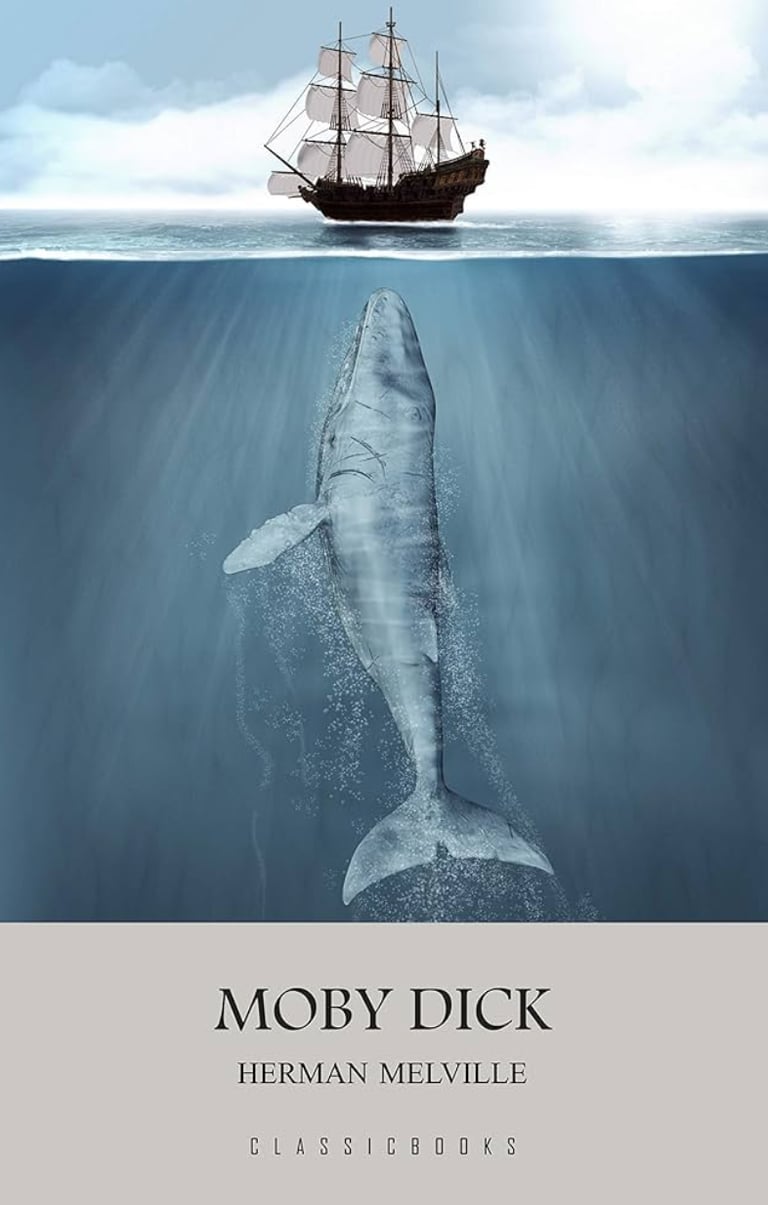
Obsession vs. Reality at Sea: Why "Moby-Dick" Still Stings
Real argument: Obsession is seductive, bureaucracy is relentless, and nature doesn’t care. Melville turns a whaling voyage into a study of how one person’s private mania captures and endangers everyone bound to him by contract, culture, and pay. Verdict: Read if you value complex, layered fiction; skip if you need a straight shot of story.
BOOKS
1/6/20264 min read
The Big Idea
Moby-Dick asks how far a leader can bend reality—and people—around an obsession before the enterprise collapses. The novel fuses sea adventure with encyclopedia: a running attempt to name, measure, and master the whale while showing how naming, measuring, and mastery fail. It solves the storytelling problem of turning metaphysics into motion by embedding philosophy in work: contracts, watches, tools, weather, quotas. It fails (usefully) to offer comfort; the universe does not tidy itself for human meaning.
What’s New Here (and Why It Matters)
Compared with tighter sea tales, this book is structurally weird on purpose. It mixes dramatic set pieces with lectures on rope, try-works, oils, and taxonomy. The novelty isn’t the hunt; it’s the synthesis—how technical manuals, sermons, stage directions, and jokes can all carry theme. That matters because the “whale chapters” are not filler; they’re the point. They show how systems thinking can’t fully domesticate chaos—and how a culture can rationalize risk until catastrophe looks like work as usual.
Core Arguments / Plot Architecture (spoiler-safe)
Structure: Episodic voyage framed by a first-person narrator who alternates between action, reflection, and didactic mini-essays. Expect bursts of plot punctuated by craft notes and metaphysical side paths.
Stakes: Money (a lay system that pays by success), status (who commands knowledge and courage), and sanity (will to dominate vs. willingness to perceive).
POV & setting: A single ship becomes a floating society: multinational crew, strict hierarchy, tight schedules, and fragile safety protocols. Ports and passing ships function as mirrors and warnings.
Thematic spine: Obsession vs. observation; meaning-making vs. indifference; individual charisma vs. institutional procedure.
Deep Dive
Craft & Technique
Voice: A chatty, shape-shifting narrator toggles from streetwise to scholarly. The style is elastic—sermon, farce, stage play.
Pacing: Lurches by design. Melville builds pressure through alternation: forward thrust → pause to explain → forward thrust. If you want steady acceleration, this will frustrate you.
Character architecture: Charismatic captain; pragmatic mates; a globalized crew that embodies conflicting cosmologies. Side characters function as moral instruments (prudence, loyalty, fatalism) more than psychological case studies.
World-building through process: The novel earns authority by detailing tools, techniques, and routines—lances, lines, watch rotations, rendering oil. It’s tactile and procedural.
Theme × Form
Form mirrors thesis: Encyclopedic chapters dramatize the limits of knowledge. The very attempt to totalize the whale keeps failing, which is Melville’s point about reality.
Humor as solvent: Jokes and theatrical set pieces keep the book from preaching, even when it edges toward sermon.
Myth + management: The story braids cosmic dread with everyday management problems—crew morale, hazard pay, risk communication.
Memorable Moments (no spoilers)
A candlelit factory on the deck, flames licking at darkness while the crew renders oil—industry as ritual.
A calm sea interrupted by a sudden, surgical violence—precision meeting terror.
A gathering on deck that feels like a courtroom and a revival at once.
Practical Takeaways
Ahab check: Where is a goal outrunning signals from reality? Write the top three disconfirming facts you’re ignoring.
Lay system audit: How do current incentives push your team toward unsafe speed or tunnel vision? Change one metric this week.
Procedures vs. charisma: Name one decision that should be rule-based, not leader-based. Codify it.
Observation practice: Schedule a 30-minute “whale chapter” in your week to study a boring but essential process in detail.
Dissent protocol: Who can say no to the captain? Install a visible red-flag mechanism.
Tool humility: List the limits of your dashboards/OKRs. What can’t they see?
Meaning hygiene: When things go sideways, separate cause, blame, and story; treat them as different objects.
Contrarian Note
The standard defense of the encyclopedic digressions claims they’re all genius. Not always. Some sections dilute tension and repeat earlier points. The contrarian stance: editing 10–15% of the didactic material would not harm the core argument. Why it matters: if you’re reading for intellectual payoff, pruning improves signal-to-noise without gutting the book’s intent.
Blind Spots & Risks
Violence toward animals: The whaling scenes are graphic and morally hard; the book does not sentimentalize.
Race and representation: The multinational crew is vivid but filtered through 19th-century lenses and stereotypes.
Metaphysical overhang: Religious and philosophical rhetoric can eclipse human stakes for some readers.
Reader fatigue: The tonal whiplash (sermon → slapstick → technical manual) is a feature and a bug.
Who Should Read This (and Who Shouldn’t)
Read if you’re:
Interested in how big systems fail under charismatic leadership.
Patient with hybrid forms that smuggle ideas through craft details.
Willing to let plot idle while ideas spool.
Maybe skip if you’re:
Seeking tight plot and contemporary minimalism.
Uninterested in historical labor, maritime tech, or theological riffs.
Triggered by animal harm descriptions.
How to Read It
Pacing strategy: 2–3 chapters per sitting; alternate action and “encyclopedia” chapters to keep momentum.
Skim/slow guidance: Skim repetitive taxonomy; slow down in scenes that involve leadership decisions, crew rituals, and technology use.
Format tips: Audio helps with rhythm and humor; print helps for cross-referencing terms and recurring motifs.
Annotation: Keep a glossary for gear and roles; note each moment where incentives override judgment.
Scorecard (1–10)
Originality: 10 — Novel as field manual, myth, and management case.
Rigor / Craft: 9 — Dazzling structure with some bloat.
Clarity: 7 — Brilliant passages, but dense and digressive.
Emotional Impact: 9 — Awe, dread, and bitter comedy.
Re-read Value: 10 — New systems and symbols emerge each pass.
If You Liked This, Try…
Joseph Conrad, Heart of Darkness — Obsession and empire stripped to the bone.
Herman Melville, Bartleby, the Scrivener — Workplace nihilism as quiet revolt.
Nathaniel Philbrick, In the Heart of the Sea — Nonfiction origins of whaling catastrophe.
Ian McGuire, The North Water — Brutal Arctic whaling with noir velocity.
Cormac McCarthy, Blood Meridian — The sublime and horrific welded into frontier labor.
FAQs
Q:Is this based on real events?
A:Parts draw from 19th-century whaling culture and disasters; the story is fiction.
Q:Do the “whale chapters” matter?
A:Yes. They build the novel’s argument about knowledge, power, and limits—even if some are repetitive.
Q:Is it hard to read?
A:Language is rich but intelligible; difficulty comes from length and form shifts, not obscurity.
Q:Can I read an abridged version?
A:You can, but you’ll lose the form-theme interplay. Unabridged is the intended experience.
Q:Where should I focus if time is tight?
A:Early shipboard setup, leadership inflection points, scenes explaining tools and incentives, and the closing sequence.
Final Verdict
A demanding classic that earns the effort. Read it less as a hunt and more as a systems novel about leadership failure, industrial risk, and the stories we tell to boss reality around. The detours are the price of admission—and often the payoff. Buy if you want a book that keeps teaching; borrow if you just want the chase without the manual.