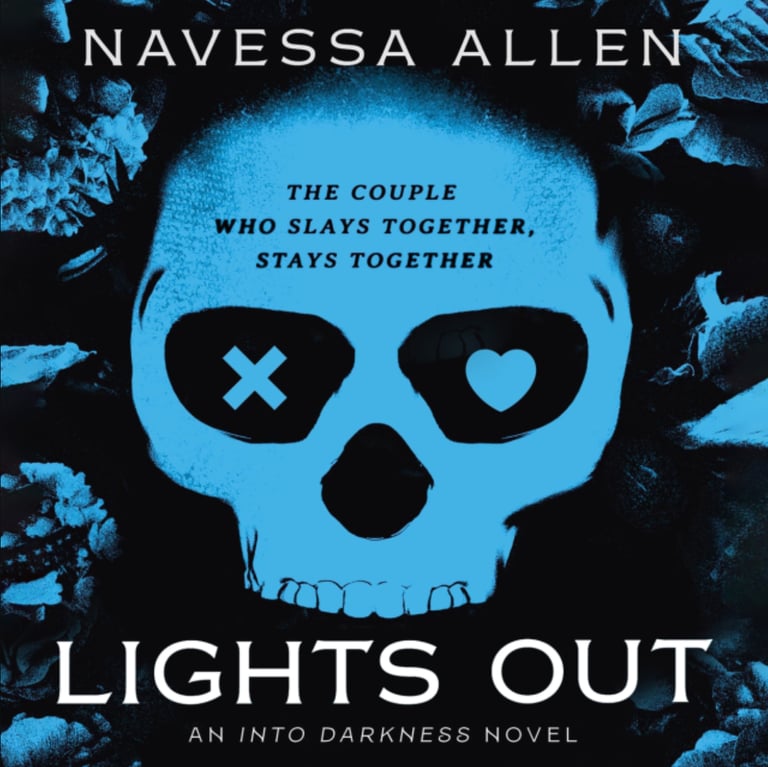
“Lights Out” makes stalker romance go mainstream—does it hold up?
Real argument: A viral dark-romance that leans into “consensual pursuit” fantasies, internet fame, and a morally gray protector. High heat, high risk. Verdict: Read if you want a slick, spicy entry into stalker romance; skip if you need wholesome, low-anxiety vibes.
BOOKS
1/11/20264 min read
The Big Idea
“Lights Out” asks a blunt question: what happens when a fantasy about being hunted meets real-world consequences? The book pairs a trauma nurse (Aly) with a masked internet personality (Josh) whose curated thirst-trap persona collides with her public dare—then escalates from play to genuine peril. The pitch is unapologetically dark romance: spike the adrenaline, blur the line between threat and thrill, and then force the characters to choose what protection, obsession, and trust actually mean.
What’s New Here (and Why It Matters)
Plenty of dark romances serve the “morally gray protector” trope; fewer braid it to modern parasocial dynamics. By making Josh an influencer with “millions of fans” and anchoring Aly’s desire in a public comment—“break into my house wearing a mask”—the novel foregrounds how online performance reshapes intimacy and risk. It’s BookTok-native: the work assumes you understand kink-friendly discourse, trigger warnings, and trope taxonomies (stalker romance; “he falls first”; black-cat x golden-retriever). That specificity helps the book speak to readers who want spice with meta-awareness.
Core Arguments / Plot Architecture (spoiler-safe)
Structure: Book one in the Into Darkness series; 416 pages; contemporary setting. Expect a fast pace, escalating danger, and a protector pivot.
Stakes: Aly’s kink collides with a real antagonist “with far more sinister intentions,” pushing Josh from fantasy predator to real-world guardian.
Evidence style (for the genre): The “evidence” is execution—bottle-rocket pacing, high heat, banter, and set pieces engineered to test consent boundaries and loyalty under threat. The front-matter trigger warnings signal the book knows it’s playing near hard lines.
Deep Dive (Fiction)
Craft & Technique
Narrative energy: It promises “fast-paced,” “hilarious banter,” and “high heat.” The text lives or dies on rhythm—scene turnover is quick, and danger beats arrive to justify the title. If you need slow-burn tenderness, this is not that.
Trope economy: Stalker romance, masked MMC, “he falls first,” and the cat-and-sun pairing telegraph the emotional geometry: a brooding sentinel orbiting a sunnier counterpart. In dark romance, trope clarity isn’t a crutch—it’s a contract.
Theme x form: The internet frame (anonymity, performance, virality) mirrors the mask motif: desire is curated, then de-curated under stress. That cohesion makes the fantasy feel of-the-moment rather than retro-gothic.
Assumptions Under the Hood
Fantasies of pursuit can be narratively “safe” if the text builds explicit consent scaffolding.
An influencer’s mask can plausibly obscure identity long enough to drive a novel.
Readers will tolerate ethically messy behavior when motives scan as protective or devotional.
Practical Takeaways
For readers (and book clubs) navigating dark romance:
Read the TWs first. Make a yes/no list for personal limits; stop if a line is crossed.
Separate fantasy from practice. Ask: which scenes hinge on explicit consent? Which on assumed consent?
Track the pivot. When and how does the MMC shift from pursuer to protector? Does the heroine’s agency expand or contract?
Note power asymmetries. Fame, physical strength, and surveillance—does the story address them or glamorize them?
Watch the mask. What is performance versus person? How does anonymity shape desire here?
Aftercare on the page. If intense scenes lack aftercare, decide whether that’s a dealbreaker.
Series expectations. It’s book one; expect series-arc hooks rather than airtight closure.
Contrarian Note
The novel treats consent as clear because the heroine publicly invited the fantasy. That’s legally and psychologically messy. A one-time public dare does not equal ongoing informed consent for escalating boundary play, especially when fear responses muddy intent. The book’s thrill depends on that ambiguity; your tolerance might not.
Blind Spots & Risks
Romanticizing surveillance. The “stalker, but hot” trope can normalize intrusive behaviors under the banner of protection.
Trauma compression. Real recovery isn’t event-driven; it’s iterative. Fast-paced plots often reduce aftermath to a cuddle and a promise.
Law & consequences. The influencer angle would realistically trigger legal, employment, and platform issues. Genre logic waves much of that away.
Cultural context. The story assumes a US/BookTok sensibility about TWs and kink. Readers outside that discourse may find the social contract unclear.
Who Should Read This (and Who Shouldn’t)
Read if:
You enjoy dark romance with clear trope labeling and high spice.
You’re curious how BookTok aesthetics translate into narrative.
You like morally gray protectors and danger-driven intimacy.
Skip if:
Stalking, coercion play, or on-page violence are hard no’s.
You want wholesome, low-angst romance or rigorous realism.
You dislike series openers that set up future books.
How to Read It
Pacing: Two or three long sittings work—tension stacks quickly.
Skim vs. slow down: Skim redundant banter; slow down on scenes where consent is negotiated (explicitly or implicitly).
Format: If sampling, read a chapter that includes both a flirtation set piece and a danger beat; you’ll know if the tone works for you.
Scorecard
Originality — 7/10: Familiar tropes, fresher social-media veneer.
Rigor / Craft — 6/10: Propulsive, but realism and aftermath are streamlined.
Clarity — 8/10: Trope labeling and TW signaling are upfront.
Emotional Impact — 7/10: Delivers adrenaline and heat; nuance varies by scene.
Re-read Value — 5/10: More ride than study.
If You Liked This, Try…
H.D. Carlton, Haunting Adeline — Stalker romance pushed to the edge; stronger horror vibes.
Penelope Douglas, Corrupt — Morally gray antiheroes, revenge-laced chemistry.
Ana Huang, Twisted Love — Overprotective MMC energy with a lighter dark streak.
S.T. Abby, The Mindfck Series* — Vigilante romance; graphic content; thriller pace.
J.T. Geissinger, Pen Pal — Anonymous letters, obsession, gothic turns.
FAQ
Is Lights Out part of a series?
Yes. It’s Into Darkness #1.
Do I need to read anything before it?
No—this launches the series.
How spicy is it?
High heat, “kink friendly,” with disturbing scenes flagged via TWs.
Main tropes?
Stalker romance, masked MMC, “he falls first,” black-cat x golden-retriever pairing.
Final Verdict
Buy if you’re dark-romance fluent and want a BookTok-native spin on the stalker/protector fantasy. Borrow if you’re curious but cautious—read the trigger warnings, sample a chapter, and decide from there. Skip if your romance needs safety nets built from realism rather than adrenaline. On its own terms, Lights Out delivers the ride it promises; your mileage depends on where you draw the line.