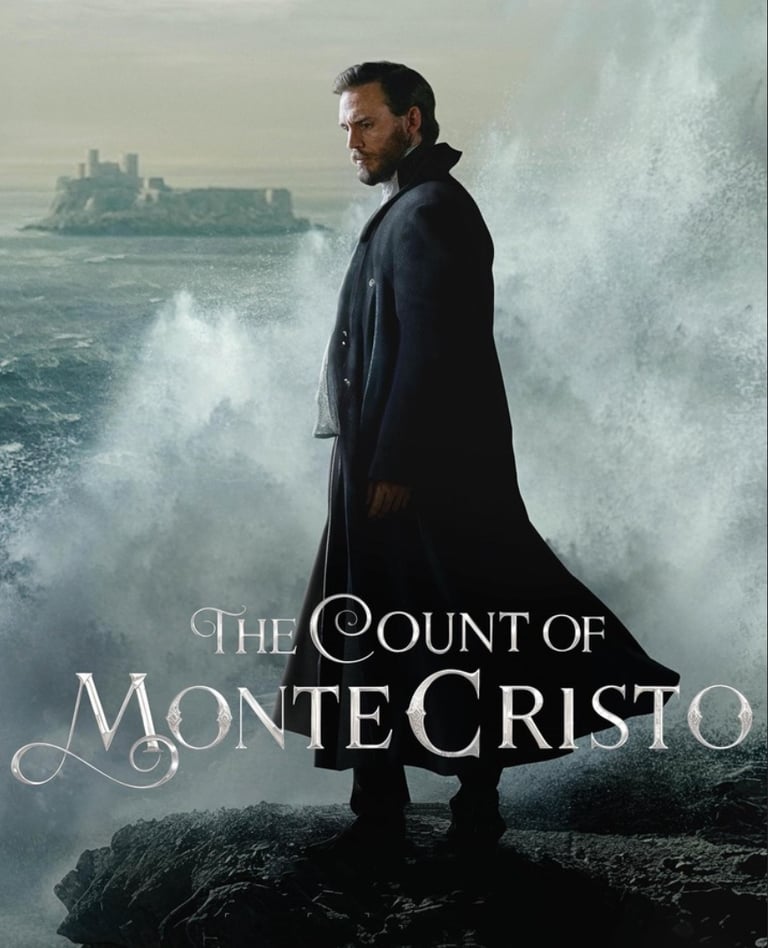
"The Count of Monte Cristo"-Revenge, Logistics, and a Question: What Is Justice For?
Real argument: Revenge looks clean in theory and costly in practice; transforming pain into purpose can build a life or hollow it out. Time, money, and masks are powerful tools, but they don’t settle the moral bill. Verdict: Read if you want a maximalist classic that still bites; skip if you crave minimalist realism.
BOOKS
1/5/20264 min read
The Big Idea
At its core, The Count of Monte Cristo asks whether meticulous revenge can restore what injustice stole—or whether it simply remakes the injured into a new kind of tyrant. Dumas turns a wrongful betrayal into a life-long project plan: acquire knowledge, capital, and influence; design bespoke consequences. The book solves the storytelling problem of turning moral outrage into momentum. It doesn’t solve the human problem of when to stop.
What’s New Here (and Why It Matters)
Among 19th-century blockbusters, this one fuses page-turning plot with a near-clinical look at power: prisons and passports, letters of credit, information asymmetry, reputation as currency. Compared with, say, Les Misérables (grace vs. law) or The Three Musketeers (camaraderie vs. intrigue), Monte Cristo is about build-versus-burn, how a person constructs a machine to deliver justice, and what that machine does to everyone caught in its gears. Readers learn how time, identity, and finance can be weaponized, and why that still won’t fix grief.
Core Arguments / Plot Architecture (spoiler-safe)
Three-part arc:
A young man’s rise and catastrophic fall.
Education and transformation—knowledge, languages, networks, wealth.
Return under new identities to “correct” the moral ledger across social strata.
Stakes: Personal honor, love, and the legitimacy of institutions (courts, press, aristocracy, finance).
Point of view & setting: Mostly third-person, sweeping from Mediterranean ports to Parisian salons; ships, islands, châteaux, and drawing rooms serve as stages for power plays.
Thematic spine: Justice vs. vengeance, identity as performance, the moral cost of perfectionist planning.
Deep Dive
Craft & Technique
Serial DNA, cinematic pace: Originally serialized, chapters end on beats that propel you forward. Expect cliffhangers and cross-cutting across plot threads.
Character architecture: Villains are distinct types—ambition, cowardice, greed—rather than psychological deep dives, but the central figure complicates into strategist, judge, and (sometimes) penitent.
World-building through logistics: Prisons with rules and routines; smuggling routes; discreet bankers; gossip channels. Dumas grounds spectacle in paperwork and timetables.
Theme × Form
Masks everywhere: Disguises, aliases, and staged encounters mirror the novel’s thesis: identity is a tool, not an essence.
Time as weapon: Long delays, patience, and compounding capital replace swashbuckling duels; the form rewards endurance like the character’s plan does.
Spectacle vs. conscience: Lavish settings and theatrics distract characters—and readers—from the ethical drift, which is the point.
Memorable Moments (no spoilers)
A claustrophobic prison education turning despair into capability.
A sun-struck island that functions like a moral hinge.
Parisian salons engineered as social laboratories where reputations quietly explode.
Practical Takeaways
Where’s the line between justice and score-settling in your life? Name one case and define a stopping rule that avoids collateral harm.
What’s your “island”—the place or practice that converts pain into skill? Identify it and schedule it.
How are you using time as leverage? List one goal where patience beats speed.
Identity as a tool: Which roles (not masks) help you act ethically? Which push you off course?
Institution audit: When a system fails you, what’s your plan besides rage—appeals, alternatives, or exit?
Collateral map: Sketch the bystanders in any conflict you’re in. How do you protect them?
Mercy clause: Under what conditions would you forgo payback? Write them down now, not later.
Contrarian Note
The moral calculus sometimes feels conveniently mechanized, villains get tailor-made fates that fit their sins a little too snugly. It scratches the itch for poetic justice but risks trivializing randomness and the way harm often lands on the undeserving. That matters because readers might mistake narrative symmetry for real-world fairness.
Blind Spots & Risks
Melodrama and coincidence: Serialization encourages improbable timing and neat reveals. If you need strict realism, you’ll roll your eyes.
Gender and class: Female characters often serve as moral compasses or victims; working-class characters are instruments more than agents.
Exoticism: Some “Oriental” flourishes and fortune-teller vibes haven’t aged well.
Length: Subplots can sprawl; patience is part of the contract.
Who Should Read This (and Who Shouldn’t)
Read if you’re:
Into long, layered plots with payoffs over hundreds of pages.
Curious about how money, rumor, and paperwork move empires and families.
Comfortable with moral ambiguity and operatic emotion.
Maybe skip if you’re:
Looking for spare, minimalist prose.
Easily frustrated by coincidences or disguises you can see coming.
Seeking contemporary social realism over high-stakes melodrama.
How to Read It
Edition/translation tips: Choose a complete, unabridged translation; skimming an abridgment can flatten character arcs and moral complexity.
Pacing: One to three chapters per sitting; don’t binge the salon scenes—space them out so the social mechanics stay sharp.
Skim/slow guidance: Skim extended society gossip once you grasp the power map. Slow down in the prison and “return” sections; they carry the book’s ethical weight.
Tools: Keep a character list; note who owes whom and why. Audio works well for travel sequences; print helps when plots converge.
Scorecard (1–10)
Originality: 9 — Revenge reimagined as an operations blueprint.
Rigor / Craft: 8 — Serial structure, tight plotting, occasional contrivances.
Clarity: 8 — Clear scenes and motivations despite a big cast.
Emotional Impact: 9 — Sustained tension; real questions about mercy and identity.
Re-read Value: 8 — New patterns emerge when you know the moves.
If You Liked This, Try…
Victor Hugo, Les Misérables — Justice, grace, and society’s machinery grinding individuals.
Alexandre Dumas, The Three Musketeers — Masks, intrigue, and loyalty with lighter stakes.
Wilkie Collins, The Woman in White — Identity, deception, and legal maneuvering in Victorian mode.
Patricia Highsmith, The Talented Mr. Ripley — Identity as performance, but with amoral chill.
Herman Melville, Moby-Dick — Obsession as an organizing principle taken to the edge.
FAQ
Is it based on a true story?
Commonly said to draw on a 19th-century case summarized by a French police archivist; details vary across sources. The novel is fiction.
Abridged or unabridged?
Unabridged preserves themes and payoffs. Abridgments move faster but often blunt moral complexity.
How hard is the language?
Straightforward. The challenge is scale—many names, places, and moving parts.
Does a modern reader need historical context?
Not required, but a short note on Restoration/July Monarchy politics makes the social stakes clearer.
What age is it suitable for?
Teens and up, depending on tolerance for violence, vengeance, and intricate plotting.
Final Verdict
A giant that earns its page count. Treat it as a study in power, how information, time, and money beat brute force and as a caution: even “righteous” plans can poison the well. The coincidences are theatrical and some attitudes are dated, but the ethical questions are current. Buy if you want a maximal, morally engaged classic you can live with for a month; borrow if you just want the gist without the grind.