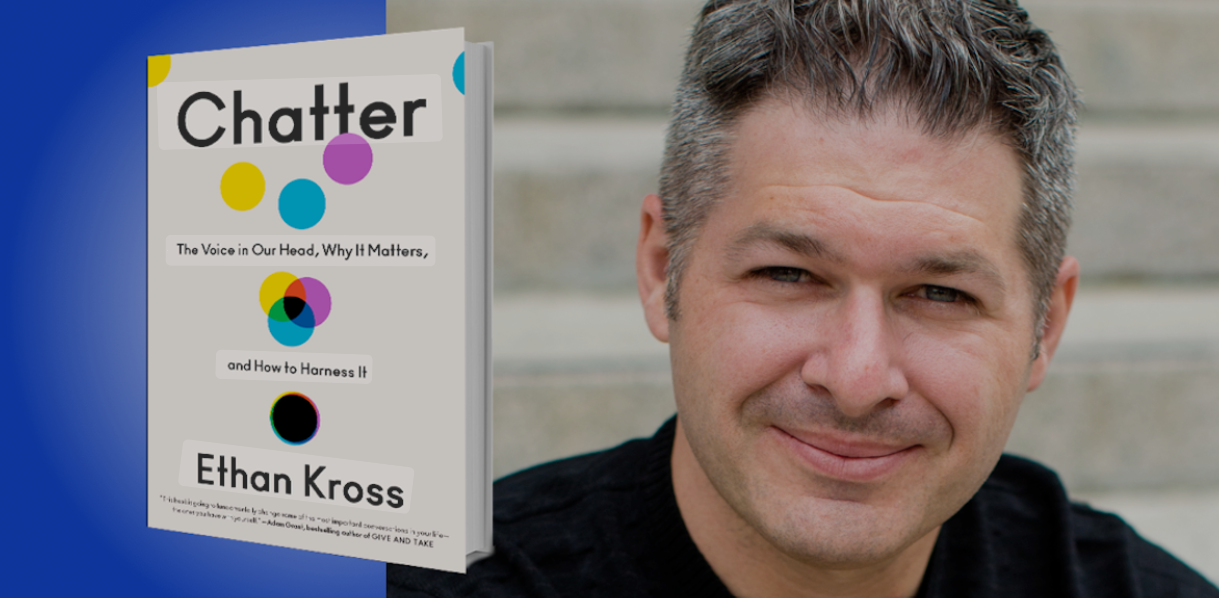
Chatter: Turning the Inner Voice from Heckler to Helpful
Real argument: The inner voice isn’t the enemy. Unchecked, it spirals into rumination (“chatter”); channeled, it’s a planning and meaning-making tool. Verdict: Read for actionable mind-tools; skip if you need clinical depth or randomized-trial-level dosing.
BOOKS
10/23/20255 min read

The Big Idea
Kross separates self-talk (useful) from chatter (looping rumination that hijacks attention, mood, and performance). The fix isn’t “think positive.” It’s distance, structure, and environment: step back from the heat, give the voice a job, and tighten your attention ecology. The book is a toolkit, not a memoir. It solves the everyday grind of overthinking; it doesn’t treat major disorders.
What’s New Here (and Why It Matters)
The novelty is the operationalization of “psychological distance.” You’ve heard “zoom out”; Kross shows how to do it on demand-use your name, shift time, adopt a coach voice, ritualize. He also tackles social ventilation: mindlessly “dumping” feelings can amplify distress; skilled listening + reframing helps. You leave with moves you can run in the moment instead of vague advice.
Core Arguments / Plot Architecture (spoiler-safe)
Part 1: The Problem. Chatter drains working memory, warps attention, and nudges poor decisions.
Part 2: The Tools. Three buckets:
Inner tools: distanced self-talk, time-travel, reappraisal, structure (lists, calendars), expressive writing.
Interpersonal tools: choose one good listener; ask them to validate + broaden (not co-ruminate).
Environmental tools: rituals, awe, nature, tidy cues, “order the outside to order the inside.”
Evidence style: Lab studies, field anecdotes, case sketches. Accessible, not hyper-technical.
Deep Dive
Frameworks & Models
Name-Yourself Coaching:
Use: In stress moments, switch from “I” to your name. Example: “Sam, you’ve shipped half-baked before and iterated. Send the draft.” It’s a quick shot of distance.
Temporal Distance (“future you”)
Use: Write 5 lines from six-months-later you. Ask: “What will I wish I did today?” Pick the smallest irreversible step and schedule it.
Mental Zoom Lens
Use: “What’s the headline vs. the footnote?” Spend 30 seconds naming both. Keeps you from letting a footnote eat your whole day.
Expressive Writing (10×3)
Use: Three days, ten minutes each. Write the unfiltered story of the problem. No grammar, no polish. On day three, extract one controllable next action.
Attention Ecology
Use: Audit inputs (people, feeds, apps) that feed chatter. Remove one, add one awe source (walk, sky time, music) and one order source (clear desk, rename folders).
The One-Listener Rule
Use: Vent to one person trained to do two things: empathize and reframe. “That’s tough. What would future-you advise?” Avoid group co-rumination.
Evidence Check
Strong: Psychological distancing (third-person self-talk, temporal perspective) and expressive writing have consistent support in reducing rumination and improving performance under pressure. Rituals and awe show promising effects on stress markers and perspective.
Weak: Effect sizes vary; long-term durability outside lab settings is less clear. Social guidelines (how to listen without co-ruminating) are common-sense plus limited studies. This is behavioral science popularization, not a clinical manual.
Assumptions Under the Hood
You can pause for 30-300 seconds when the spiral begins.
You have at least one supportive listener who can avoid co-rumination.
Your environment permits small changes (tidy space, walk, ritual).
If your context is chaotic or clinical symptoms are severe, you’ll need professional care and structural changes.
Practical Takeaways
Switch pronouns, switch control: Use your name or “you” during crunch moments. It dials down heat and frees working memory.
Schedule a worry window: 15 minutes/day to write all worries. Outside that window, capture and defer. Containment beats suppression.
Reframe the task: Rename “presentation” to “draft review.” Language shifts expectations and pressure.
Engineer awe: Two 10-minute “awe blocks” weekly (sky watch, museum corner, time in a large natural space). The goal is small self, big world.
Design a pre-game ritual: 60-90 seconds, same sequence (breath → posture → cue phrase). Reliability calms chatter.
Pick one listener: Share the rule up front: “Please hear me, then help me zoom out to next steps.” Decline multi-person vent spirals.
Order outside to order inside: Clear one surface. Rename messy digital folders. External structure steadies internal noise.
Micro-Playbook (print this)
When the spiral starts, use your name to coach one action.
Log the thought once in a worry window; outside it, defer.
Do 10 minutes of expressive writing for three days; extract one step.
Book two awe blocks this week.
Tell one friend the one-listener rule and ask for framing help.
Contrarian Note
Not all rumination is waste. Sometimes the “loop” is your mind insisting on unresolved facts (a real risk, a real value conflict). Over-distancing can slide into avoidance. The grown-up move: alternate distance with data collection. If the worry survives fresh facts, act-or drop it.
Blind Spots & Risks
Clinical edges: The playbook isn’t designed for severe anxiety, depression, PTSD, or OCD.
Cultural variability: Self-talk styles and rituals differ across cultures; the same tools won’t land for everyone.
Workplace reality: Some “environment hacks” assume control over time and space that many lack.
Measurement creep: Feeling calmer isn’t the same as solving the problem. Pair mindset tools with hard actions.
Who Should Read This (and Who Shouldn’t)
Read if:
You overthink under pressure and want fast, portable tools.
You coach, manage, or parent and need language to help others.
You like psychology with clear steps, not just stories.
Skip if:
You need deep clinical guidance or medication discussions.
You dislike behavioral tips without long methods sections.
You want a grand theory of consciousness. This is a toolkit.
How to Read It
Pacing: Weekend read; install one tool/day for a week.
Skim vs. slow down: Skim anecdotes; slow down on distancing, expressive writing, and the social listening chapter.
Format: Any works; print/ebook helps you mark scripts and build a one-page SOP.
Team use: Start meetings with a 30-second distance cue for tough topics.
Scorecard (1-10)
Originality: 7 - Distancing is known; the packaging is crisp and usable.
Rigor / Craft: 7 - Research-informed but not clinical; claims mostly modest.
Clarity: 9 - Short, repeatable scripts; minimal jargon.
Usefulness: 8 - High for everyday spirals if you actually run the drills.
Re-read Value: 7 - Handy as a reset before big events.
If You Liked This, Try…
Unwinding Anxiety (Judson Brewer): Habit-loop model for worry with mindfulness tactics.
The Happiness Trap (Russ Harris): ACT tools for defusion and values-first action.
The Upside of Stress (Kelly McGonigal): Reframing physiological arousal to fuel performance.
Mindset (Carol Dweck): Language shifts that change performance under challenge.
Noise (Kahneman, Sibony, Sunstein): Decision hygiene when chatter muddies judgment.
FAQ
Is this just positive thinking in a lab coat?
No. It’s distance and structure over cheerleading. Many tools reduce arousal without denying reality.
Can I teach this to teens or teams?
Yes. The scripts are simple. Practice together so it’s not weird in crunch time.
How fast does it work?
Often immediately for distancing; expressive writing helps within days. Durability depends on repetition and pairing with action.
What if I don’t have a good listener?
Use a written coach voice (your name) and expressive writing. Also, set rules with a new listener-validation plus reframing.
Will this replace therapy?
No. It’s a complement. If your chatter comes with persistent impairment, get professional help.
Final Verdict
Chatter is a clean, practical field guide to turning the inner monologue from saboteur to staff. The distance tools are simple and sticky; the social and environmental advice is mostly common sense-but useful when codified. Buy if you want scripts you can run today. Borrow if you need clinical specificity or long-form neuroscience. The mind won’t go quiet; it can, however, be managed.