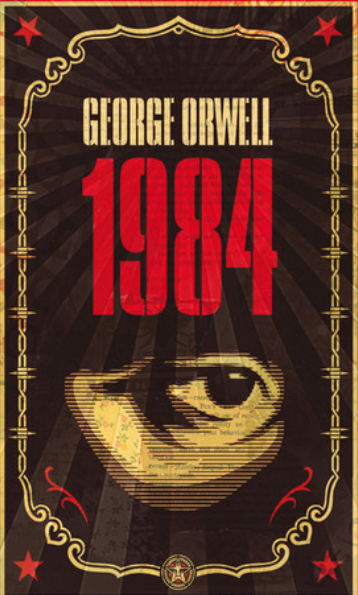
The Manual for Unfreedom: A Pragmatic Review of "1984"
Real argument: Totalitarianism survives by colonizing language, memory, and attention, until resistance feels impossible. Verdict: Read. It’s a diagnostic tool for any age obsessed with control.
BOOKS
12/1/20254 min read


The Big Idea
1984 asks a blunt question: how do regimes break the link between reality and perception so thoroughly that people police themselves? Orwell’s answer is not just fear or force. It’s a stack: surveillance, bureaucratic terror, and—most crucial—language engineering. The book solves no policy problem, but it gives a durable framework for spotting soft totalitarian habits long before boots hit the door.
What’s New Here (and Why It Matters)
Plenty of dystopias warn about tyrants. Orwell maps the mechanics: linguistic choke points (Newspeak), attention capture (telescreens), reality edits (the Ministry of Truth). Where earlier works emphasize shock, 1984 focuses on maintenance—how a system sustains itself day after day. That’s the part most societies underestimate. The value today: you can lift his concepts—doublethink, thoughtcrime, memory holes—and use them as operational tests for institutions and media ecosystems.
Core Arguments / Plot Architecture (spoiler-safe)
Structure: Three parts. Life under the Party; a brief opening of possibility; consequences.
Stakes: The integrity of a human mind when reality is litigated by power.
POV & setting: Third-person limited on Winston Smith in Airstrip One (London) under Oceania’s regime.
Thematic spine: Truth control through language and ritual; intimacy as rebellion; the inevitability (or not) of resistance.
Evidence style: Fictional but systematic—ministries’ functions, ritualized hate, bureaucratic paperwork, and that technical-feeling Newspeak appendix.
Deep Dive (Fiction)
Craft & Technique
Narrative voice: Clinical and spare. The restraint amplifies dread better than melodrama would.
Pacing: Slow-burn accretion of constraints. Moments of hope are intentional whiplash.
World-building: Institutions feel ordinary—forms, shifts, slogans—making the horror plausible instead of theatrical.
Character arcs: Winston’s arc tracks from private doubt to fragile defiance. Julia embodies pragmatic survival, not ideology. O’Brien is the system’s smiling pedagogue.
Theme × Form
Language as control: Newspeak is not flavor text-it’s the product spec for a world where certain thoughts become unthinkable.
Intimacy vs. ideology: Private bonds threaten centralized loyalty, so intimacy is criminalized.
Bureaucracy as weapon: The paperwork is the punishment; the process is the pain.
Memorable Moments (no spoilers)
A diary that feels like contraband.
A paperweight that turns into a thesis on nostalgia and evidence.
A room without a telescreen that isn’t the refuge it seems.
Practical Takeaways
Language audit: Which terms in your domain pre-decide debates (e.g., “security,” “optimization,” “misinformation”)? Who benefits from their current definitions?
Truth pipeline check: How is facts → archives → searchability handled where you work? What are your “memory holes”?
Attention governance: What are your telescreens—dashboards, feeds, alerts? Which ones you can’t switch off? Why?
Institutional incentives: If your org needed to hide failure, how would it? What early-warning rituals would you design to stop that?
Courage calibration: Where is tiny defiance (asking a precise question, demanding a source) both safe and productive? Map those edges.
Data provenance: For a claim you repeat often, trace the original source. Count how many edits stood between you and reality.
Private spaces: What non-surveilled zones—literal or digital—enable honest thought? Do you have them?
Contrarian Note
Orwell’s world assumes near-total narrative capture. In practice, modern systems are leaky, plural, and often incompetent. Black markets of truth, whistleblowers, and memetic chaos routinely puncture control. The risk today may be less monolithic tyranny than polycrisis noise—no single Big Brother, just many mid-sized brothers fighting, leaving citizens disoriented. That distinction matters for solutions.
Blind Spots & Risks
Economics as backdrop: The political economy is sketched, not analyzed. How the regime feeds, houses, and coordinates at scale is hand-waved.
Gender lens: Julia’s interiority and broader gender dynamics get less depth than the thesis deserves.
Global complexity: The three-superstate geopolitics simplify messy international feedback loops that shape real propaganda and war.
Tech specifics: The mechanisms translate well conceptually, but the book underplays how markets and algorithms—not just states—can industrialize manipulation.
Who Should Read This (and Who Shouldn’t)
Read if you are:
A policy, media, or tech professional concerned with truth systems.
A student or leader wanting a durable vocabulary for institutional pathology.
A citizen noticing how slogans are replacing arguments.
Skip (or sample) if you want:
Optimistic world-building or cathartic triumphs.
Dense plot twists and character-driven drama over ideas.
Prescriptive policy recipes.
How to Read It
Pacing: Two to four sittings. Let the atmosphere settle between parts.
Skim vs. slow down: Slow down on the Two Minutes Hate, the minibooks-within-the-book, and the Newspeak appendix. Those sections are the operating manual.
Format: Print or e-ink helps; backlit screens blunt the book’s quiet dread.
Companion texts: Pair with essays on propaganda and with a modern disinformation primer to map parallels responsibly.
Scorecard (1–10)
Originality: 9 - Not the first dystopia, but the cleanest system model.
Rigor / Craft: 9 - Tight prose; world rules are coherent.
Clarity: 10 - Concepts became common nouns for a reason.
Emotional Impact: 8 - Icy dread over sentimentality; effective by design.
Re-read Value: 9 - New layers emerge as institutions evolve.
If You Liked This, Try…
Brave New World (Aldous Huxley): Pleasure-based control vs. fear-based-useful counterpoint.
We (Yevgeny Zamyatin): Prototype of bureaucratic dystopia; see Orwell’s roots.
The Handmaid’s Tale (Margaret Atwood): Bodily autonomy under theocratic power; intimate lens.
Never Let Me Go (Kazuo Ishiguro): Quiet normalization of the unacceptable; subtle dread.
FAQ
Q:Is 1984 about socialism, fascism, or something else?
A:It’s about totalitarian techniques across ideologies. The label matters less than the methods.
Q:Why is the Newspeak appendix important?
A:It’s the logic of control in miniature: limit vocabulary → limit thought. Treat it like a spec doc.
Q:Is it still relevant in a market-driven, digital world?
A:Yes—because capture now comes from states and platforms. The tools differ; the playbook rhymes.
Q:How bleak is it?
A:Bleak. The power analysis is the point. Don’t go in expecting uplift.
Q:Can teens read it?
A:Yes, with guidance. The concepts land; the despair needs framing.
Final Verdict
Read it as a systems manual, not just a story. The plot is a vehicle; the payload is a durable vocabulary for diagnosing manipulation—by governments, corporations, or movements. It won’t tell you what to do next, but it will sharpen your filter for what’s being done to you. Buy if you annotate; borrow if you browse.